Careers at Salon Bilancio
Built for Stylists Who Want to Be Taught
Bilancio has been a teaching salon since 2008. If you are fresh out of beauty school, or licensed and tired of learning by guessing, this is the chair to stand behind.
Why a teaching salon.
"When you go to beauty school, you don't learn anything. You are there to get your piece of paper that states you are licensed by the state. It's not to say that you're a great cutter or a great colorist."
"As a salon owner, it's my duty to make sure that if there is a stylist fresh from beauty school coming to work for me, they learn the right way to do things. You get your license, you find a mentor, and you work under them as an assistant. You hope they have an educational program where they show you the proper ways to cut different shapes, and you practice while you learn under them until you are ready to actually work on a person. That, to me, is the most successful route."
Nina Pelfini, owner. From Life After Beauty School: Apprenticeships vs Mentors.
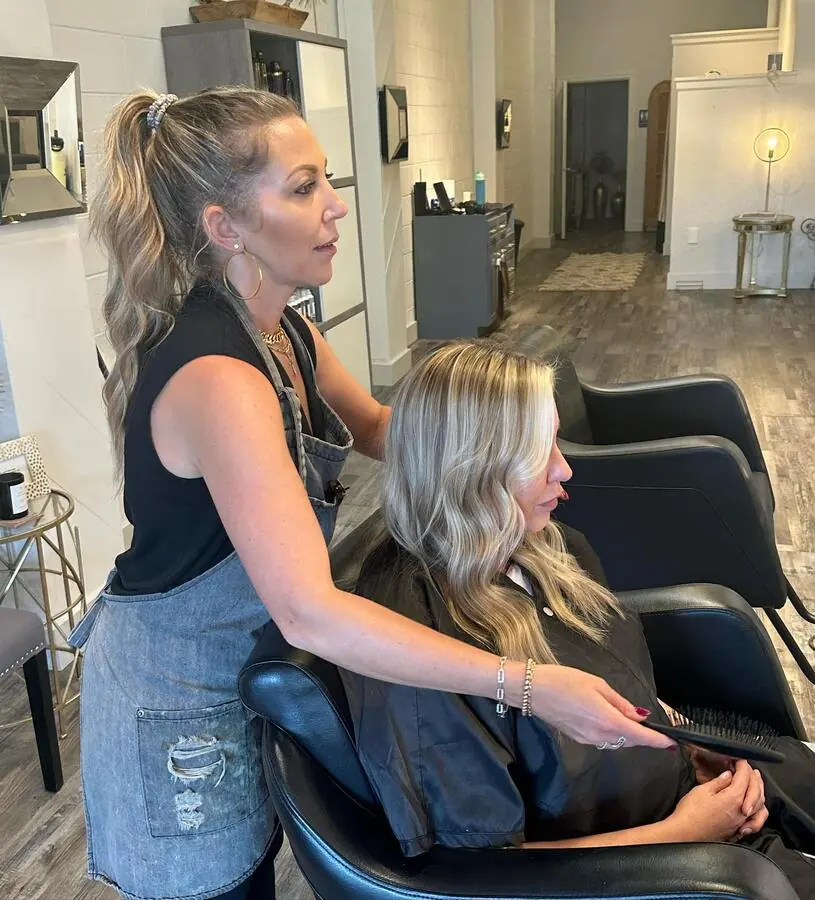
Nina came up through a two-year, 2,400-hour apprenticeship herself. She has mentored stylists into their own chairs for sixteen years. That is the program here: assistant first, mentored every week, then the chair when you are ready, not when a schedule says so.
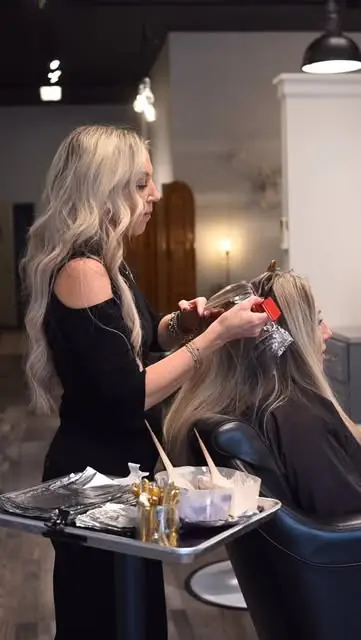
Choose your path
Two ways in. One standard.
Assistant hairstylist
The open role. You are licensed or in school, you want to be taught, and you are willing to start at the shampoo bowl and earn the chair. Paid, structured, with a weekly training breakdown and a mentor.
The roleApprenticeship and mentorship
The ten-week training breakdown, the education behind it, and what a Bilancio-trained stylist knows that most don't: Aveda color theory, Vidal Sassoon cutting, and the NBR® method.
Education for stylistsThe Bilancio difference
What you get that a booth in a big salon will never give you.
A mentor, not a manager
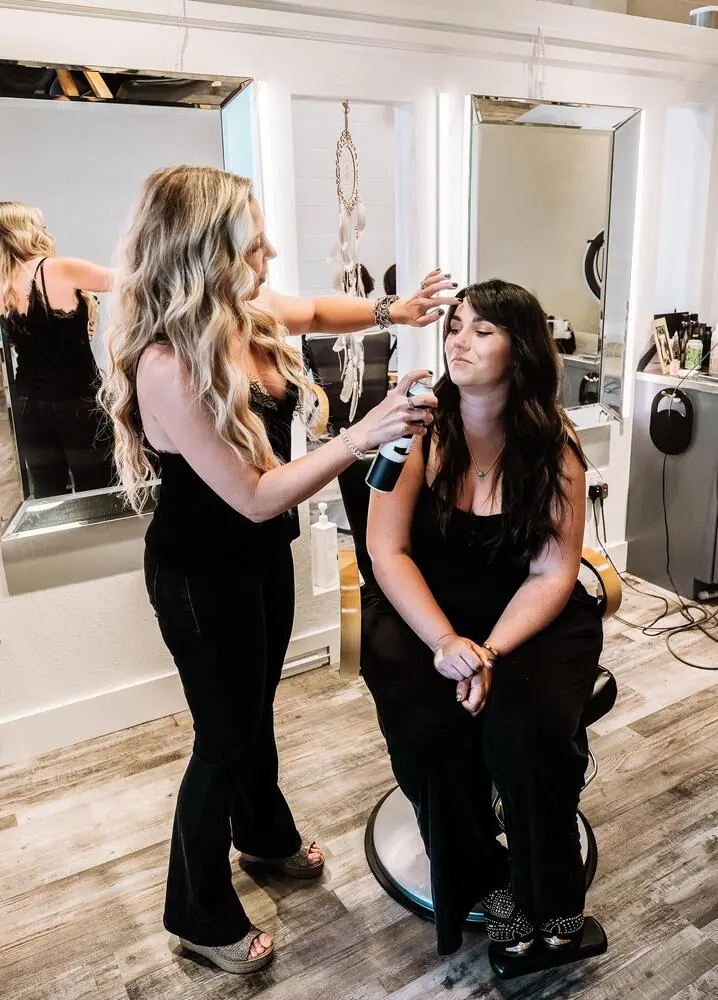
Nina is a master colorist, an NBR® licensed artist, and a Vidal Sassoon trained cutter. You learn on the floor, on real guests, with her.
A written curriculum
Week one is the shampoo bowl. Week ten is highlighting patterns. Every week between is written down, so you always know what you are working on.
Extensions, taught properly
Most salons never touch NBR®. Here it is the core of the business, and assistants learn the rows from the first month.
Aveda product knowledge
We are Aveda Artists. You learn the line, the color system, and the formulation, not just how to sell it.
A small, tight team
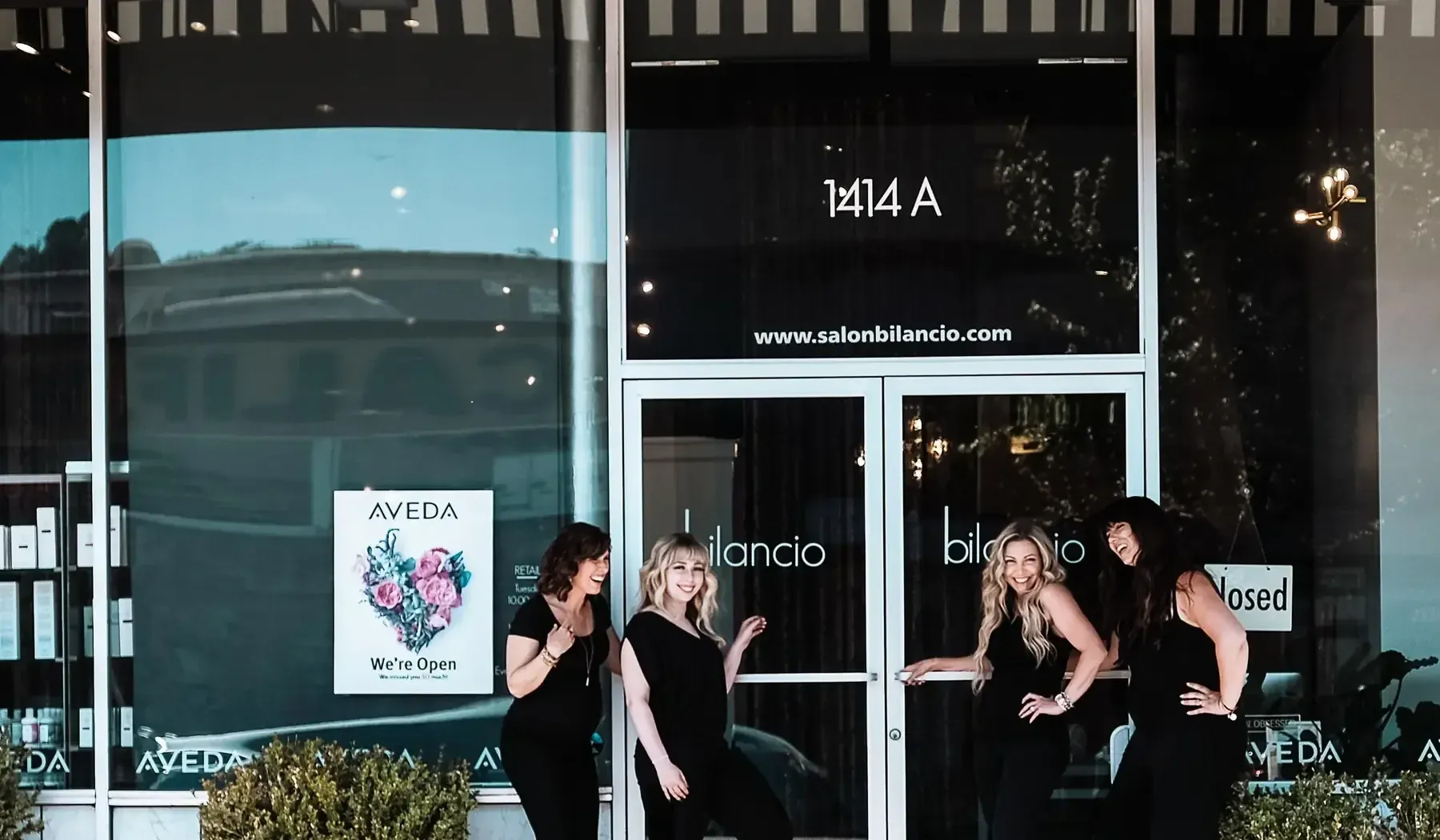
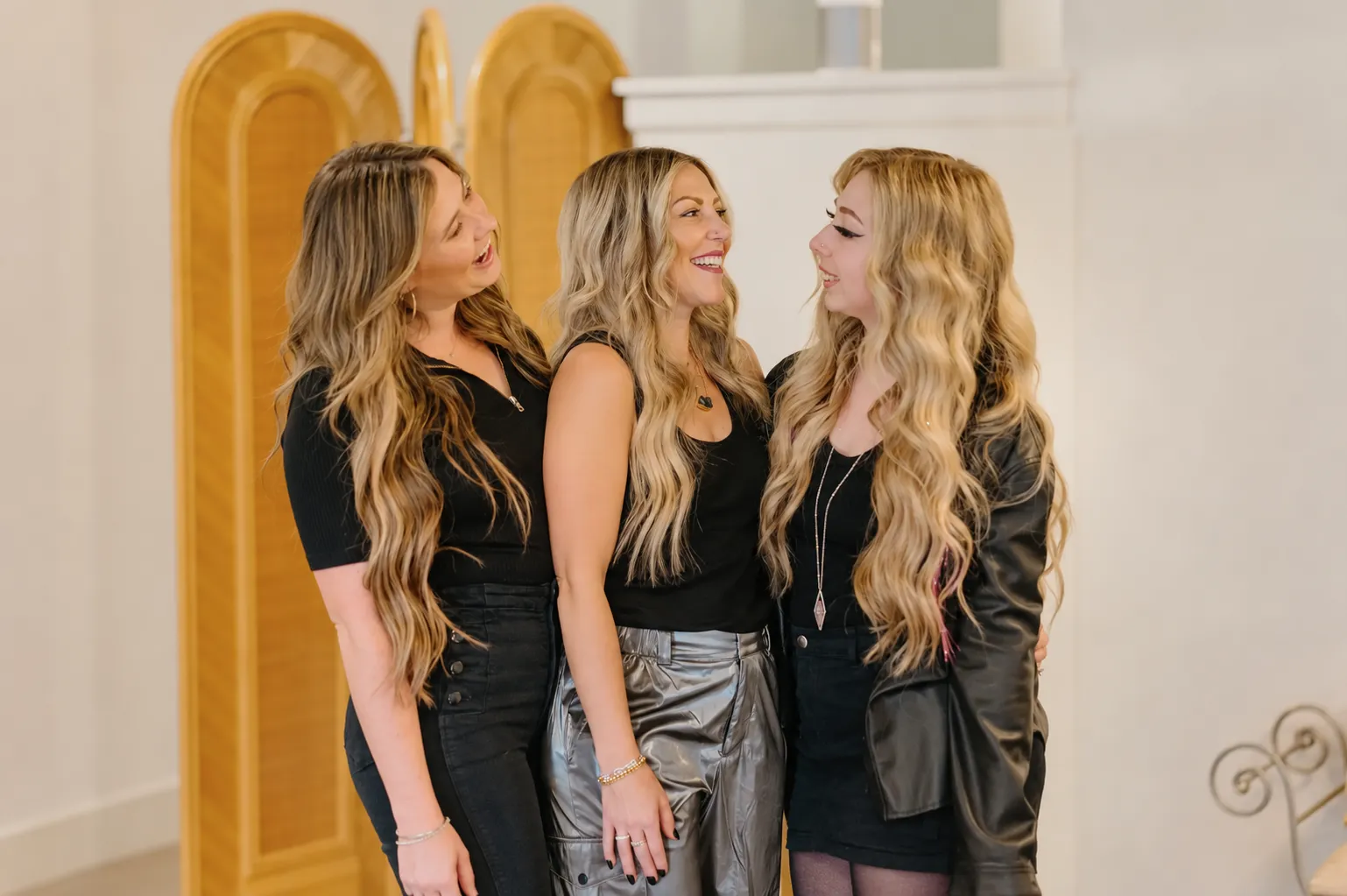
Three of us behind the chair, no black dress code. Culture is documented in writing and signed on your first day, so there are no surprises about what is expected.
Guests who come for the teaching
Our reviews say the same thing over and over: she teaches you as she goes. That is the standard you will be held to, and it is what fills the book.
Compensation and schedule
Tuesday to Saturday, in the salon on 4th Street in San Rafael. Compensation, hours, and the path from assistant pay to a stylist's chair are discussed at your interview, in writing, so you can compare it against anything else you are considering.
If the numbers are what you need before you apply, text us and ask. A real answer is faster than a vague job post.